
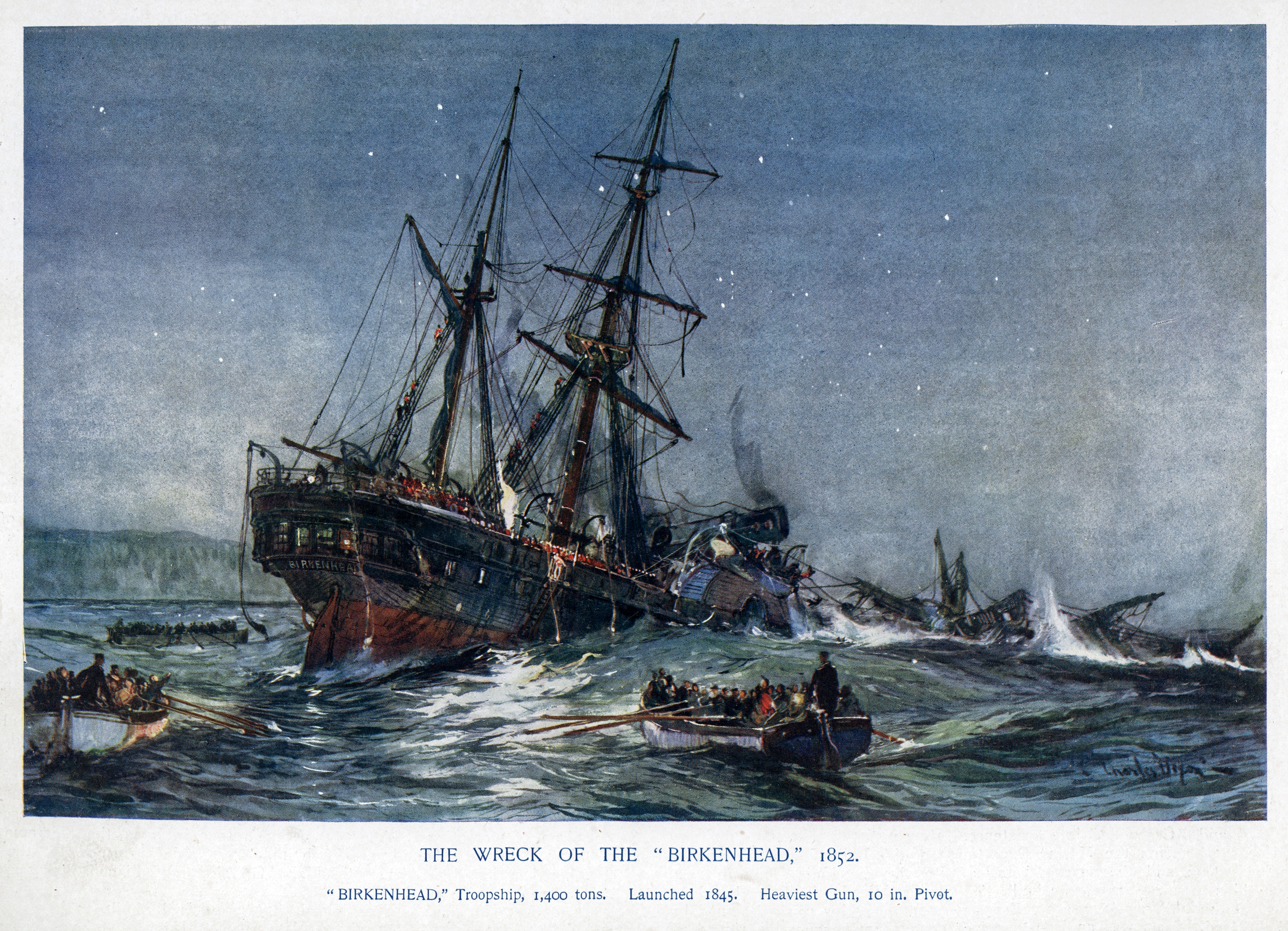
The history of South Africa is filled with remarkable events, but few stand out as vividly as the sinking of HMS Birkenhead off the coast of Gansbaai in 1852. This tragic maritime disaster not only led to the immortalisation of the phrase “women and children first” in naval tradition but also tied into the broader context of South Africa’s 8th Frontier War. The sinking was a cruel blow to the British military efforts, as many of the soldiers aboard were intended to reinforce the fight against the amaXhosa, who fiercely resisted colonial encroachment.

In this blog post, we revisit the tragic wreck of HMS Birkenhead, the gallantry displayed during the sinking, and the incredible stories of survival against the odds. We also delve into the interconnectedness of the disaster with the ongoing war in South Africa, particularly focusing on the amaXhosa people, who used fire signals to transmit messages at high speed back in the 1850s.
The Sinking of HMS Birkenhead
On a fateful night in February 1852, the HMS Birkenhead, an iron-hulled vessel of the Royal Navy, was en route to Algoa Bay, carrying reinforcements to support the British campaign in South Africa’s 8th Frontier War. The ship was an innovative marvel of its time—one of the earliest iron-clad steamers built by the Royal Navy, designed to combine sail and steam propulsion. But its final voyage, carrying almost 700 people—including soldiers, women, and children—was destined to end in tragedy.

Commanded by Captain Robert Salmond, the HMS Birkenhead had been converted into a troopship to deliver soldiers from various regiments to the frontier. On board were men from the 74th Highland Regiment, who had already suffered heavy casualties in their previous engagements with the amaXhosa along the rugged terrain of the Amatola Mountains. These troops were sorely needed, as the British forces, led by Sir Harry Smith, were locked in a brutal struggle against Maqoma and Sandile kaNgqika, leaders of the amaXhosa resistance.
However, the Birkenhead would never reach its destination. Just a few kilometers off the treacherous coast of Gansbaai, the ship struck an uncharted rock near Danger Point in the early hours of February 26, 1852. The collision was so severe that it ripped open the hull of the ship, causing water to flood in, particularly where many soldiers were sleeping below deck.

“Women and Children First” – A Legacy of Gallantry
As panic gripped the ship, it was Lieutenant Colonel Seton’s command of “women and children first” that would resonate through history. There was no formal emergency drill in those days, and lifeboats were in limited supply—only three out of eight were usable. Yet, amid the chaos, the soldiers aboard exemplified incredible discipline. They formed ranks on deck, standing firm as they watched the women and children being ushered into the lifeboats.
The story of this gallantry became a symbol of Victorian valor. In the midst of calamity, the soldiers and sailors aboard the Birkenhead jeopardized their own survival, ensuring that every woman and child made it to safety. Their actions cemented the phrase “women and children first” into maritime history, marking a poignant moment of self-sacrifice in a desperate struggle for survival.

The Fierce Storm and Miscalculations
The tragic fate of HMS Birkenhead can be traced back to a series of critical decisions and unfortunate miscalculations. Captain Salmond, under pressure to deliver reinforcements quickly to the embattled British forces, opted to sail through treacherous conditions. The ship had already endured a grueling 47-day voyage from Portsmouth to Simon’s Bay, battling storms and high seas. Conditions on board were far from ideal—three women had perished during the crossing, but four babies had been born, a testament to the harsh and unpredictable life at sea.
Upon leaving Simon’s Bay for the final leg of its journey, HMS Birkenhead faced two major challenges. First, there were subtle but crucial navigational errors, caused by minor compass misalignments that placed the ship closer to shore than anticipated. Second, the strong south-east current in Walker Bay was pushing the vessel toward the rocky coastline, further narrowing their margin of safety. Captain Salmond was determined to make haste, yet this haste proved fatal when the uncharted rocks near Danger Point tore through the Birkenhead’s iron hull.


The power of the waves directly in front of the Danger Point area, Gansbaai, South Africa. Beauty and the beast, the fynbos in all it’s beauty belying the terrible power off shore. ©Des Latham.
Chaos, Discipline, and Heroism
The collision with the rocks at Danger Point unleashed chaos aboard HMS Birkenhead. As the ship began to sink, water flooded into the lower compartments, where many soldiers were asleep. The impact was so sudden and severe that those in the forward cabins were drowned almost instantly. For those who made it to the deck, the sight was dire—several lifeboats were damaged, and only three could be launched. Panic began to set in.
Yet amid the confusion, discipline prevailed. Lieutenant Colonel Seton, standing at the helm of the troops, took charge, shouting the now-famous order, “women and children first.” Soldiers who moments earlier had been scrambling in desperation stopped in their tracks and formed orderly lines. It was an extraordinary display of self-control in the face of impending doom. As the lifeboats were lowered into the calm but cold Atlantic waters, they were filled with the women and children, leaving hundreds of men still stranded on the sinking ship.

Captain Robert Salmond, meanwhile, made a fateful decision. He ordered the engines reversed in a last-ditch effort to refloat the ship. But as the Birkenhead backed off the rocks, it was struck by a wave that pushed it back onto the jagged reef, splitting the vessel in two. The bow section sank immediately, leaving the stern precariously afloat. The soldiers, still standing at attention, were now ordered to save themselves. “Every man for himself” was the final call as the ship began its final descent beneath the waves.
Sharks, Kelp, and the Struggle for Survival
As the HMS Birkenhead slipped beneath the surface, hundreds of men were plunged into the cold waters of the Atlantic. The survivors faced two immediate threats: the strong currents dragging them towards the open ocean, and the notorious white sharks that patrolled these waters. The area around Gansbaai is infamous for its large shark population, and it did not take long for the sharks to begin circling the wreckage.
Desperate soldiers and sailors clung to debris—tables, barrels, spars, and even stools—in a frantic attempt to stay afloat. There was only one life jacket on board, the property of Cornet Bond of the 12th Lancers. Bond’s private lifejacket saved his life as he swam through the dangerous waters, eventually making it to shore where, remarkably, he found his horse waiting for him.


For many others, however, the situation was far more dire. The water was filled with debris, but also blood, which attracted the sharks. Alexander Russell of the 74th Highlanders famously gave up his place on a lifeboat to save another man, only to be dragged under by a shark moments later. The horror of the scene was unimaginable, as men struggled not only against the waves but also the relentless predators that feasted on the wreck’s casualties.
Some survivors were caught in thick kelp, a familiar feature of South Africa’s coastal waters. Exhausted and panicking, many drowned after becoming entangled. Despite these deadly obstacles, some men did manage to make it to shore, either by clinging to debris or swimming. For others, their only hope was to stay afloat long enough to be rescued by the few boats that had successfully launched from the sinking Birkenhead.
The Aftermath of the Disaster
As dawn broke on February 26, 1852, the full scale of the tragedy became evident. Bodies began to wash ashore, many bearing the horrific marks of shark attacks. The survivors who had made it to the beaches near Gansbaai were weak and in shock. Fishermen living in the area did their best to help those who had made it, while others set out in boats to search for survivors clinging to the wreckage.
Of the nearly 700 people aboard the Birkenhead, fewer than 200 survived. Eighty men were rescued by boats, while others had managed to hold onto the ship’s masts, which remained above the waterline for a time before finally sinking. The sharks continued to take a toll, and it is said that the men who survived did so largely by staying clothed—the sharks seemed to target those who were naked or semi-naked in the water, possibly drawn by the movement of limbs.

The disaster became one of the most infamous maritime tragedies of the 19th century, but it also sparked important changes. The gallantry of the soldiers aboard HMS Birkenhead set a precedent for maritime safety, with “women and children first” becoming standard practice in future shipwrecks. In addition, the disaster led to the introduction of emergency drills for passengers—an enduring legacy that continues to save lives today.
Historical Reverberations: The 8th Frontier War
The sinking of HMS Birkenhead was not just a maritime disaster; it had significant military implications as well. The troops aboard were meant to reinforce British efforts in the 8th Frontier War, a brutal conflict that had been raging for years between the British forces and the amaXhosa people. This war was one of many frontier conflicts in South Africa, as the British Empire sought to expand its control over the region.
The Birkenhead’s loss was a devastating blow to the British campaign. With hundreds of soldiers lost to the sea, the reinforcements intended for Sir Harry Smith’s troops never arrived. Smith, stationed in King William’s Town, was leading an offensive against Maqoma and Sandile kaNgqika, two powerful amaXhosa leaders who had been resisting British forces along the rugged Amatola Mountains. The British had already suffered heavy casualties, particularly the 74th Highlanders, who had been fighting in difficult terrain along the Amatola ridges. The loss of the Birkenhead’s reinforcements left Smith in a precarious position, unable to immediately replace the soldiers lost in earlier battles.

To compound the tragedy, shortly after hearing the news of the Birkenhead disaster, Sir Harry Smith received another devastating blow: a letter from Colonial Secretary Earl Grey recalling him to England. His recall marked the end of his leadership in South Africa, a position that had become increasingly untenable due to the failures in the war and the mounting losses. Despite this, Smith was determined to make one last push before leaving. He launched a final offensive into the Waterkloof region, which had long been a stronghold for the amaXhosa.
This operation, carried out in March 1852, would prove to be one of the most successful British campaigns of the war, clearing the Waterkloof of amaXhosa forces and driving Maqoma and his followers from the mountains. Ironically, it was Smith’s swan song—a brief victory in an otherwise grueling and protracted conflict.
Lieutenant Colonel Eyre and Ruthless Warfare
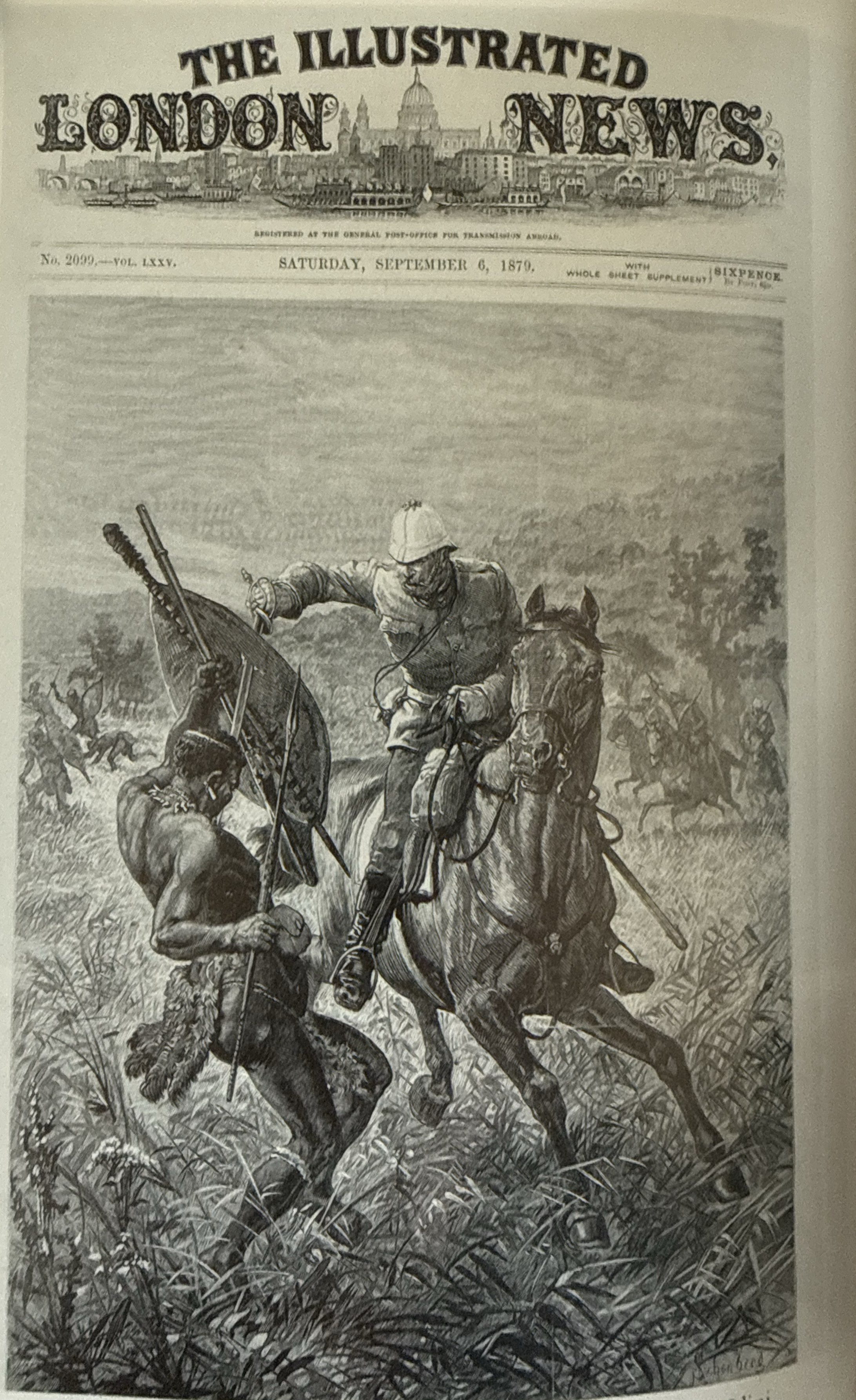
Much of the success of this final offensive was due to the leadership of Lieutenant Colonel Eyre, a ruthless and effective officer who understood the intricacies of bush warfare far better than most of his counterparts. Eyre was not a typical British officer. While many in the British ranks adhered strictly to traditional military rules and tactics, Eyre was pragmatic and unsentimental, combining the British style of warfare with local knowledge.

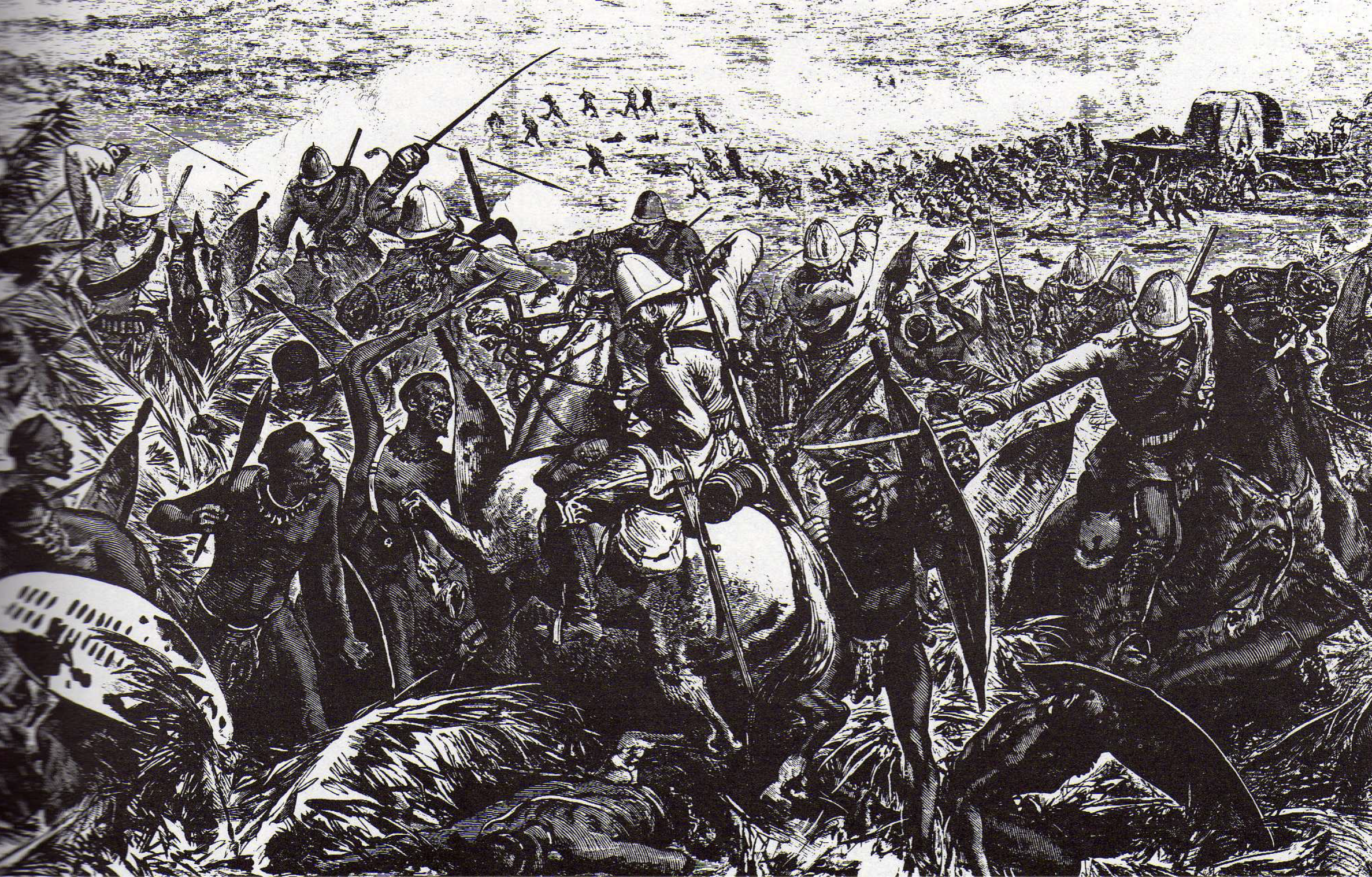
He was known for his harsh tactics, giving no quarter to his enemies. His men, wearing their traditional red uniforms, were allowed to make practical adaptations such as using rough patches and local gear to better navigate the harsh conditions of the bush. Eyre’s unrelenting strategy saw his troops operating at night, launching surprise attacks on the amaXhosa, and systematically clearing the mountainous Waterkloof region.
Eyre’s actions during this campaign were brutal, but they were also effective. The British soldiers, including the amaMfengu mercenaries who fought alongside them, took no prisoners during the final sweep of the Amatolas. Eyre’s men showed little mercy, killing all who resisted, including women, though children were mostly spared. The war had reached a point where clemency was no longer an option—British soldiers had witnessed their comrades being tortured to death by amaXhosa warriors, often with the direct involvement of amaXhosa women. The atrocities committed on both sides during the war had stripped away any remaining sense of moral restraint.

For the British soldiers, many of whom had lost friends to slow and painful deaths, the sight of Xhosa women torturing their fellow soldiers to death turned their hearts cold. The British campaign became one of vengeance as much as it was about military conquest. When prisoners were taken, they were often handed over to the amaMfengu, who killed them with equal ferocity, looting their bodies for valuables like karosses, beads, and ivory rings.

This harsh reality of warfare, with all its brutality and loss, marked the final weeks of the 8th Frontier War. Within ten days of intense fighting, Smith and Eyre managed to achieve what others had failed to do for over a year—Maqoma and his forces were driven from their mountain stronghold, and resistance along the Fish River collapsed. However, the cost in human lives and moral degradation was high.
The amaXhosa Fires: Communication at the Speed of Light
While the British struggled with the challenges of terrain and troop deployment, the amaXhosa were demonstrating their own mastery of the land. One of the most remarkable aspects of their warfare strategy was their communication system, which relied on signal fires to transmit messages across vast distances. This method, though simple, was astonishingly effective. With strategically placed fires on hilltops, the amaXhosa could convey messages from East London to Alice—a distance of over 100 kilometers—in just 15 minutes.
To put this in perspective, consider a modern analogy. In 2009, during a humorous experiment, a pigeon named Winston was sent on a 100-kilometer journey from Pietermaritzburg to Durban, carrying a data card on its foot. The pigeon completed the journey in just over an hour, while during that time, only 4% of the same data had been transmitted via a slow internet connection. The comparison highlights just how efficient the amaXhosa communication system was, rivaling even 21st-century technology in terms of speed.
The amaXhosa fires were not just a method of conveying simple messages—they were part of a sophisticated system that allowed the amaXhosa chiefs to stay informed about British troop movements in real-time. For example, when Sir Harry Smith’s successor, Sir George Cathcart, stepped off a coastal steamer in East London on the night of April 8, 1852, the fires on the hilltops began to blaze. Within 15 minutes, everyone in British Kaffraria and the Transkei knew of Cathcart’s arrival.

The speed at which information traveled via the amaXhosa fire signals was extraordinary, especially when contrasted with the often sluggish and error-prone communication systems of the British. This mastery of communication gave the amaXhosa a strategic advantage, allowing them to coordinate their resistance more effectively and to anticipate British movements well in advance.
In fact, it was this rapid communication that informed Maqoma of Sir Harry Smith’s recall almost immediately after it was decided. Knowing that his old adversary had been removed and aware of the devastating loss of reinforcements aboard the Birkenhead, Maqoma saw an opportunity. He returned to his stronghold in the Waterkloof, planning to negotiate better terms with the new British leadership.
Despite the overwhelming technological superiority of the British forces, the amaXhosa’s ingenious use of signal fires was a reminder that knowledge and communication could level the playing field, even in the face of a powerful colonial army.
Conclusion
The story of HMS Birkenhead is one of tragedy and heroism, but it is also deeply intertwined with the broader narrative of South Africa’s 8th Frontier War. The loss of the Birkenhead not only marked one of the greatest maritime disasters in British history, but it also had far-reaching consequences for the war effort in South Africa. The gallantry of the soldiers aboard, who ensured that “women and children first” became a lasting principle of maritime safety, has been remembered as one of the defining moments of Victorian valor.
Yet, as the British Empire struggled to maintain its grip on South Africa, the amaXhosa were demonstrating their own remarkable resilience and ingenuity. From their use of signal fires to their fierce resistance in the mountains of the Waterkloof, the amaXhosa were not easily subdued. The 8th Frontier War, with all its brutality and bloodshed, was a reminder of the high cost of colonial expansion and the fierce determination of those who resisted it.
In the end, Sir Harry Smith’s final victory in the Waterkloof was short-lived. His recall marked the end of his controversial leadership in South Africa, and despite his tactical successes, the losses sustained during the war—including the devastating loss of the Birkenhead’s reinforcements—would leave a lasting mark on British military history.
As for the amaXhosa, their swift communication system and tactical use of the land showed that even in the face of overwhelming force, they could hold their own. The fires on the hilltops, blazing across the landscape faster than even modern technology could match, were a symbol of their resilience and adaptability. In the end, the Birkenhead disaster and the 8th Frontier War both stand as stark reminders of the human cost of empire and the tenacity of those who fought to defend their way of life.

Leave a Reply