
Thanks to the listeners for being patient, this newsletter comes after an hiatus due to an extremely busy start to 2026 – I was traveling for most of January which impacted delivery. But here we are.
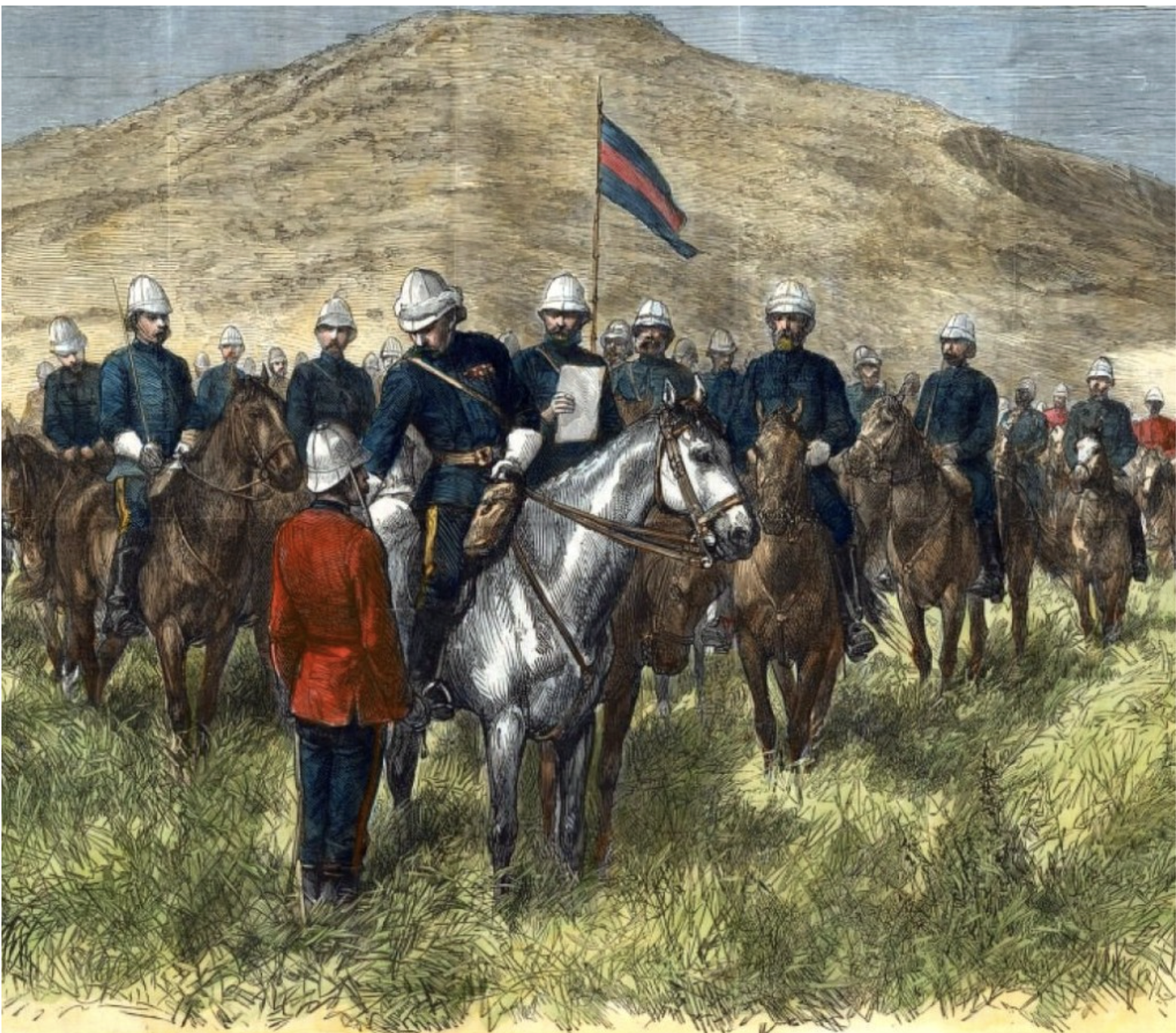
This arc covers the tense opening week of the British invasion of Zululand in January 1879. It follows the parallel movements of Lord Chelmsford’s Central Column and King Cetshwayo’s massive army of 24,000 warriors as they inevitably draw closer to their historic collision. This series then follows the immediate, gruesome aftermath of Isandlwana and the legendary (yet often mythologized) defense of Rorke’s Drift. It shifts from the chaos of battle to the cold reality of its consequences for both sides.

- Episode 251: The Vultures Gather. While the British micro-managed their advance, the Zulu army prepared ritually for war. We are introduced to the Zulu commanders: the seasoned Ntshingwayo kaMahole Khoza and the more diplomatic Mavumengwana kaNdlela Ntuli.
- Episode 252: Fatal Confidence. Chelmsford’s reconnaissance failed to detect the Zulu main body, which was already lurking just 16 kilometers away behind Isipesi Hill. Despite warnings from local experts like Henry Francis Fynn Jr. about the poor defensive position of the Isandlwana camp, the British failed to laager their wagons.
- Episode 253: The Three-Front War. The invasion expands as Colonel Pearson moves along the coast and Evelyn Wood (known as ukhuni or “the wood”) operates in the north. In the center, Zulu scouts use Matshana kaMondisa as a decoy to lure Chelmsford away from his main camp.
- Episode 254: The Trap is Sprung. Chelmsford makes the “fatal decision” to split his force, leading more than half his men out of camp to chase shadows in the Mangeni Valley. Back at Isandlwana, Colonel Durnford arrives but impulsively leads a patrol out of the camp’s perimeter, further thinning the defenses.
- Episode 255: The Day of the Dead Moon. The Zulu army, originally planning to wait for a more auspicious spiritual day, is discovered by a British patrol and launches a spontaneous, massive assault. The “Chest and Horns” formation envelops the camp, and a partial solar eclipse adds a supernatural horror to the battlefield as the British line collapses.

“Did You Know?”
- The Vultures: The Zulu nicknamed Cetshwayo’s huddling advisors amanqe (vultures) because they huddled in their grey trade blankets like birds sheltering something grave.
- The Udibi Boys: For every three Zulu warriors, there was a young teenage boy (udibi) carrying sleeping mats, cooking pots, and spare shields.
- The Eclipse: At the height of the Battle of Isandlwana, a partial solar eclipse occurred, which both sides viewed as a terrifying omen.
- Shield Evolution: By 1879, Zulu shields had changed since Shaka’s day; because herds were depleted, regiments could no longer have uniform colors, and black/brown hides were relegated to the youngest warriors.
Key Historical Figures in this Arc
- Lord Chelmsford: The British General whose overconfidence and decision to split his force led to catastrophe.
- Ntshingwayo kaMahole Khoza: The 70-year-old Zulu commander and gifted orator who “swayed every decision” for the King’s army.
- Lieutenant Colonel Anthony Durnford: A brave but impetuous officer who sought to restore his tarnished reputation through action at Isandlwana.
- Redvers Buller: A courageous but hot-headed cavalry leader under Evelyn Wood, noted for his natural talent for guerrilla warfare.
(Episodes 256–260)
- Episode 256: The Night of Terrors. Following the British defeat at Isandlwana, Lord Chelmsford returned to the battlefield at dusk on January 22nd. In the pitch blackness, his surviving men bivouacked among the “naked, gashed and ghastly” bodies of their comrades. The Zulu had opened the stomachs of the dead—not out of desecration, but due to a traditional belief that this released the spirit (Hlomula) to prevent the killer from going mad or falling ill.
- Episode 257: Rorke’s Drift Part I. While Cetshwayo had ordered his men not to cross the border into Natal, Prince Dabulamanzi led a reserve force of 3,000–4,000 warriors across the Mzinyathi River to “wash their spears”. At the Rorke’s Drift mission station, Lieutenants Chard and Bromhead used 90kg sacks of corn and heavy biscuit boxes to build improvised defensive walls just hours before the attack.
- Episode 258: Dabulamanzi’s Gamble. The defense of Rorke’s Drift became a night of horrors. Despite overwhelming numbers, the Zulu warriors found the British bayonets more terrifying than their rifle fire. The struggle was personal and brutal; as the hospital burned, the British were forced into a final redoubt made of mealie bags. By 2:00 AM, both sides had reached a point of physical and mental exhaustion.
- Episode 259: The Ghost Armies. On the morning of January 23rd, the exhausted uThulwana regiment and Chelmsford’s retreating column passed within a “stone’s throw” of each other. In a singular moment in military history, neither side fired a shot, bound by a shared, unspoken trauma.
- Episode 260: The Fallout and Global Echoes. The news of the disaster at Isandlwana eventually reached Britain, threatening to collapse the Disraeli government. This episode also looks at the global context of 1879, including the birth of the “five-and-dime” retail model by F.W. Woolworth, which later influenced the naming of South Africa’s own Woolworths.
“Did You Know?”
- The Invisibility Cloak: During the chaos at Rorke’s Drift, Gunner Howard survived by hiding under Otto Witt’s abandoned priestly vestments, emerging only when the Zulu had retreated.
- The Myth of the Colours: The famous story of Lieutenants Melvill and Coghill “saving the colours” is complicated by the fact they were the only 1/24th officers to leave their men at Isandlwana. Some historians suggest the colours were an “excuse” for a quick getaway.
- The Redcoat Target: Only five officers survived Isandlwana, and all were wearing blue patrol jackets; King Cetshwayo had specifically ordered his warriors to target the British in their conspicuous scarlet tunics.
- The “Iron Horse”: While the war raged in the north, the 1870s saw the rapid expansion of railways in the Cape and Natal, with the “iron horse” beginning to replace the traditional ox-wagon for inland transport.
Key Historical Figures in this Arc
- Prince Dabulamanzi: Cetshwayo’s half-brother, described as a “well-rounded English rogue” who dressed in European clothes and loved gin and tonic, yet led the unauthorized raid on Rorke’s Drift.
- Lieutenant John Chard & Gonville Bromhead: The two British officers who led the desperate defense of Rorke’s Drift.
- James Dalton: A key figure at Rorke’s Drift who helped organize the mealie-bag defenses and continued to lead even after being severely wounded.
- Max Sonnenberg: The entrepreneur who, decades later in 1931, legally took the “Woolworths” name for his Cape Town store because the American brand hadn’t registered its trademark in South Africa.

Leave a Reply