
History of South Africa episode 172
In this blog update, we dive deeper into the fascinating topics covered in Episode 172: the establishment of the Republic of Potchefstroom, Hendrick Potgieter’s trek into Bapedi country, and the rebellion faced by Mswati the First.

The Republic of Potchefstroom and the 33 Articles
On April 9th, 1844, the Volksraad approved the 33 Articles, establishing the Republic of Potchefstroom. These articles laid the groundwork for the fledgling state, setting up basic laws and procedures. Notably, some of these early laws would echo through South Africa’s history, influencing periods including apartheid and even contemporary times.
The 33 Articles primarily focused on court procedures, remaining vague on governmental structure. The Republic’s executive officers—Commandants, Assistant Commandants, Field-Kornets, and Assistant Field-Cornets—were responsible for military and administrative duties. Despite these measures, the Articles’ lack of clarity often led to the adaptation of the Winburg Boers’ constitution to fill gaps.
Voortrekker Leadership and Territorial Disputes
The 1840s were marked by disputes between Boer leaders Andries Pretorius and Hendrick Potgieter. British sovereignty over Natal pushed many Voortrekkers to trek back over the Drakensberg into the transOrangia region, leading to the formation of communities north of the Vaal River. In 1849, these communities temporarily unified, adopting a precursor to the Transvaal Constitution, which persisted until the South African Republic’s foundation.
Johan Arnold Smellekamp and Dutch Influence
Johan Arnold Smellekamp, a Dutch citizen, played a notable role during this period. He initially arrived in Natal in 1841, claiming Dutch support for the Voortrekkers, which was an exaggeration. Smellekamp’s activities led to diplomatic tensions, and he was eventually barred from Natal by the British.

However, Smellekamp’s influence didn’t end there. He advised Potgieter to move north of the 26th degree latitude to escape British influence and trade freely with Dutch merchants. This advice led Potgieter to organize a new trek, resulting in the establishment of the settlement of Ohrigstad.
The Founding of Ohrigstad
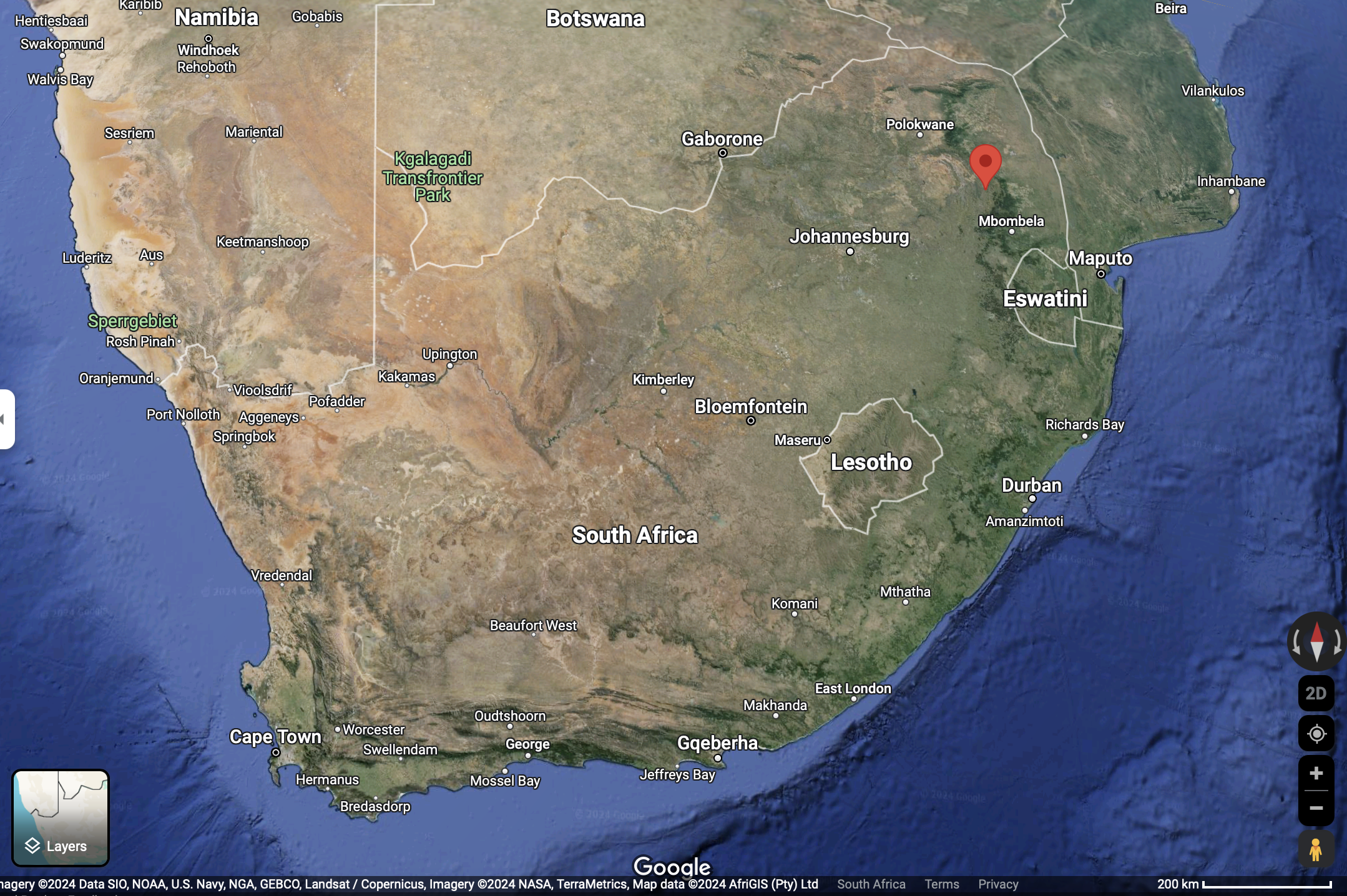
In 1844, Potgieter led a group of Voortrekkers to establish Ohrigstad, believing it to be strategically located near Delagoa Bay. This settlement was named after Andries Pretorius and Smellekamp’s shipping partner GG Ohrig. However, the distance from Potchefstroom created governance challenges.
Upon their arrival, the Voortrekkers encountered the Bapedi people, who had been displaced by Mzilikazi’s amaNdebele two decades earlier from their ancestral land near modern-day Pretoria. This interaction added complexity to the Voortrekkers’ expansion, highlighting the intricate web of relations in the region.
Mswati the First and Internal Struggles
To the South East of Ohrigstad Mswati the First had inherited a kingdom with fragile unity and faced internal divisions. His ascension at the age of sixteen was marked by a rebellion led by his elder brother, Fokoti, which ultimately failed. Mswati’s mother, Thandile, played a crucial role in reorganizing the kingdom, drawing on her experience from the amaNdwandwe empire.
Despite internal strife, Mswati sought to strengthen his position. He faced challenges from regional chiefs and even his elder brother, Malambule, who sought support from the amaZulu king Mpande, and missionary James Allison.
Diplomatic Maneuvering with the Voortrekkers
As tensions rose within Swaziland, Mswati saw an opportunity to ally with the Voortrekkers at Ohrigstad. Potgieter, however, had already made an agreement with Bapedi chief Sekwati, promising protection in exchange for land. Potgieter’s refusal to ally with the Swazi monarch was based on this existing agreement.
Differentiating Between the Bapedi and Swazi Peoples
The Swazi people under Mswati the First were consolidating their kingdom amidst internal strife. Mswati inherited a fragmented realm that his mother, Thandile, helped stabilize by introducing military and administrative reforms. The Swazi society was also hierarchical but faced significant internal divisions among various chiefdoms and royal family factions.
The Swazi raided the Bapedi constantly, so with the arrival of the Boers, new power networks began to spring up in the region.

Conclusion
The interactions between Potgieter’s Voortrekkers, the Bapedi, and Mswati’s Swazi kingdom reveal the complex political landscape of the mid-19th century. Potgieter’s personalized leadership style and the internal dynamics within Swaziland significantly influenced the region’s development.

Leave a Reply