
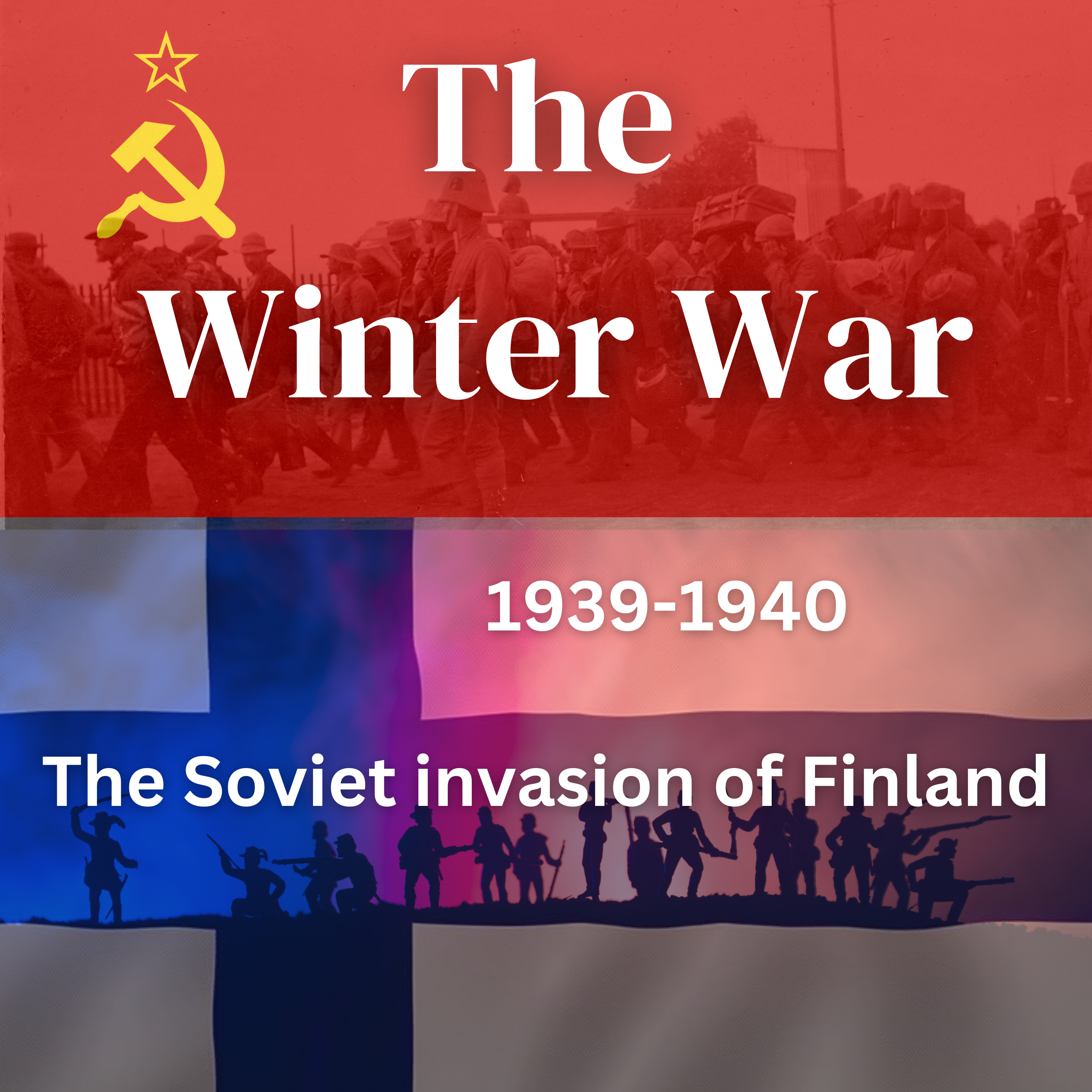
Episode 1 – Finland trapped between the Russian Bear and the German Wolf

A Shocking Invasion and Misunderstood Intentions
In November 1939, Finland faced a surprising and brutal invasion by Russia. This marked the beginning of a complex and often overlooked chapter in European history. The Finnish government, having misread Joseph Stalin’s intentions, was unprepared for the attack, signifying the start of a tumultuous period for the small Baltic state.
The Karelian Isthmus: A Land of Stark Beauty and Strategic Importance
The Karelian Isthmus, located at the eastern end of the Baltic Sea, was the stage for this historical drama. This rugged, narrow strip of land, known for its stern beauty, crisp blue lakes, and evergreen forests, was more than just a picturesque landscape. It became a critical point of contention due to its strategic position between Russia and the Scandinavian Peninsula.
Historical Backdrop: The Longstanding Conflict
The conflict between Russia and Finland has deep historical roots, dating back to the early 18th century when Peter the Great built St. Petersburg on Swedish-owned land. This marked the beginning of a power struggle for control over the Baltic States and the Karelian Isthmus, a crucial trade route and gateway for conquest. Over the centuries, this region witnessed the rise and fall of empires, with various armies – including Mongols, Swedes, and Russians – vying for control.
The 20th Century: From World War Fears to Finnish Nationalism
Fast forward to the 20th century, the Karelian Isthmus once again became a focal point of geopolitical tension. Stalin’s fear of a German attack on Leningrad (St. Petersburg) through this region led to the Soviet invasion of Finland. However, this was not just a story of territorial conquest but also one of deep-seated fears and strategic calculations.
A Symphony of Resistance: Jean Sibelius and Finnish Nationalism
The Russian oppression ignited a fiery Finnish nationalism, symbolized poignantly by Jean Sibelius’s composition “Finlandia,” a musical embodiment of the desire for independence. This period also witnessed the rise of key figures like Carl Gustav Mannerheim, a former Tsarist general who would become a central character in Finland’s fight for sovereignty.
Independence, Civil War, and the Complexities of Peace
The Finnish declaration of independence in 1917, following the Russian Revolution, was a turning point. However, it led to internal conflicts, including a civil war between the Red and White Guards. The involvement of foreign powers, particularly Germany, further complicated the situation, leading to a fragile peace in the early 20th century.
Reflecting on a Turbulent Past
This blog post only scratches the surface of the intricate and often tumultuous history of Finnish-Russian relations. From the strategical importance of the Karelian Isthmus to the cultural and political shifts within Finland, this story is a testament to the resilience and complexity of a small nation caught in the crosshairs of larger powers.
Stay tuned for more insights into this fascinating chapter of European history in our upcoming podcast episodes!

Leave a Reply