
Episodes 226–231 of History of South Africa
When the Winds Changed: Climate and Upheaval in the Late 1860s

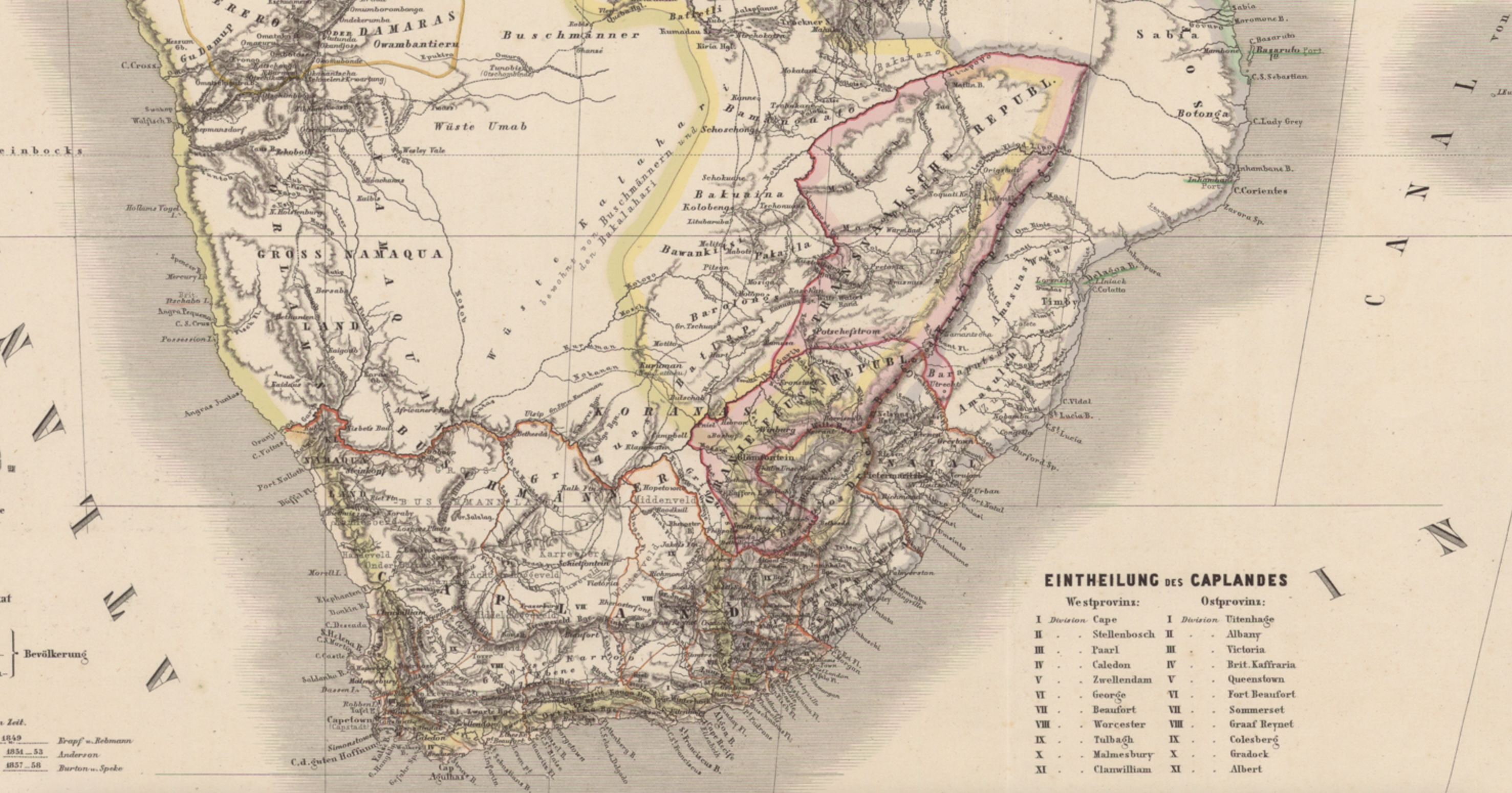
The mid-1860s in Southern Africa were years when weather and history conspired to make life precarious. Drought spread like a slow plague from the Karoo to the Cape’s lush southern forests. The sun bit down on farmers, their sheep withered, their crops failed, and many packed up their lives to sail for places as far away as New Zealand, seeking gentler rains.
In Episode 226, we explored how these climatic tremors—along with political and economic ripples—would lay the groundwork for greater disruptions. The Cape’s export economy still leaned heavily on wool, but diamonds had begun to shimmer faintly in the north, signalling the coming upheavals.
The weather wasn’t merely a backdrop; it was an actor in its own right. As berg winds tore down from the highlands, they were harbingers of change—sometimes rain, more often fire.
And fire would indeed come.
Knysna’s Forests Burn: The Great Fire of 1869 (Episode 230)
In Episode 230, we journeyed to February 1869. It began innocuously, as so many tragedies do—a curl of smoke on the horizon.
The Great Fire of 1869 started near Meiringspoort and swept with terrifying speed. Fueled by years of drought and fanned by gale-force berg winds, it consumed homesteads, livestock, and vast swathes of Knysna’s famed forests.
Henry Barrington, owner of Portland estate, left us a haunting diary:
“One might as well be on the barest Karoo place as on the beautiful banks of the Knysna river. Plenty of bushbuck roasted alive, and I daresay an elephant or two, but not a sign of life but an old baboon crooning over the desolation.”
Yellowwoods, stinkwoods, assegais—the towering elders of the Knysna forests—were reduced to ash.
The colonial government, prodded by this catastrophe, appointed Captain Christopher Harison as Conservator of Forests. It was the birth of South Africa’s first conservation efforts—not out of love for the forests, but out of fear that unchecked felling would wreck the timber economy.

Still, it marked a subtle shift. A recognition, however faint, that nature could be exhausted. More than 40 people died in the blaze in the Tsitsikamma and Humansdorp areas alone. Great Brak River was particularly hard hit, all dwellings burned and the population left destitute with all their crops gone.

Diamonds and Rival Ports: An Economy in Flux (Episodes 227–228)
While forests burned in the south, a glittering revolution was underway in the north. In Episodes 227 and 228, we tracked the rise of the diamond fields along the Vaal and Orange rivers.

Port Elizabeth’s merchants were quick to extend their networks inland. Standard Bank opened its first branch at the diggings in 1870. Diamonds would soon eclipse wool as the Cape’s major export, but in 1869, wool still reigned supreme, with Algoa Bay (Port Elizabeth) handling more trade than even Cape Town.
The opening of the Suez Canal that November sent a shiver through Cape ports. Would ships bypass them entirely? Investors had poured fortunes into wharves and piers; now the canal threatened to render these obsolete.
It was a time of economic anxiety, ambition, and political infighting—especially between the Western Province’s Cape Town elites and the Eastern Province’s merchants in Port Elizabeth and Grahamstown.
War and Peace and the Wider World (Episode 230)
The global context in Episode 230 provided a fascinating counterpoint to South Africa’s local struggles.
Elizabeth Cady Stanton testified before Congress in America, Wyoming granted women the right to vote—the first in history. Tolstoy’s War and Peace arrived late in 1869, a doorstop of a novel that redefined the form.

Across the Atlantic, John Hyatt patented celluloid, laying foundations for the film industry. Sainsbury’s opened in London. Meanwhile, Black Friday—then a stock market crash, not a shopping spree—rocked Wall Street.
History seemed to be speeding up. And in the southern mountains, a Basotho king was reaching his end.
Moshoeshoe’s Last Stand: The Mountain Fox Faces Mortality (Episodes 229–231)

In Episodes 229 through 231, we turned our focus to Moshoeshoe, the founder of the Basotho nation.
By 1870, the old man of the mountains was ailing. He abdicated in favour of his son Letsie, breaking with tradition in an attempt to strengthen succession. But his efforts to engineer the future—crafting legal fictions around primogeniture and “female husbands”—would sow seeds of discord in later years.
As his body weakened, a different battle raged around him. French Protestant and Catholic missionaries jockeyed for his soul.
The Protestants, long embedded in Basotho society, clung to their hard-won influence. The Catholics, newer arrivals, brought nuns, incense, and a seductive pageantry Moshoeshoe found intriguing.
“I have two eyes,” he told Father Gerard, “one looks at the Bafora, the other at the BaRoma.”
The struggle reached fever pitch in early 1870. Both sides claimed victory, insisting Moshoeshoe had converted to their creed on his deathbed.

He died on March 11th, 1870, at Thaba Bosiu. Reverend Jousse conducted the funeral, but Catholic Father Gerard would forever insist it was his Church that won Moshoeshoe’s heart.
As the Basotho buried their founder, poets sang:
Re ba mang Basotho?
Ha Moshoeshoe a shoele?
Re tla sala re le ba mang?
Whose are we Basotho?
When Moshoeshoe is dead?
Whose people shall we be?
Echoes into the 21st Century
That question echoes still. In 2025, Lesotho faces different pressures. A 50% US tariff on its textile exports threatens tens of thousands of factory jobs. Though the tariff was postponed, most orders were cancelled.
This is no cavalry charge, no crackle of musketry—only quiet factories and workers wondering where the next paycheque will come from.
Again we ask:
Basotho re ba mang?
Whose people shall we be?
🎧 Listen to History as It Unfolds
Episodes 226–231 of History of South Africa carry us through storms, fires, diamonds, and the death of a nation-builder.
Rate the podcast to help others discover these stories. Visit desmondlatham.blog for updates, or email me your thoughts.
Listen to the episodes here


Leave a Reply to Peter PluggeCancel reply