
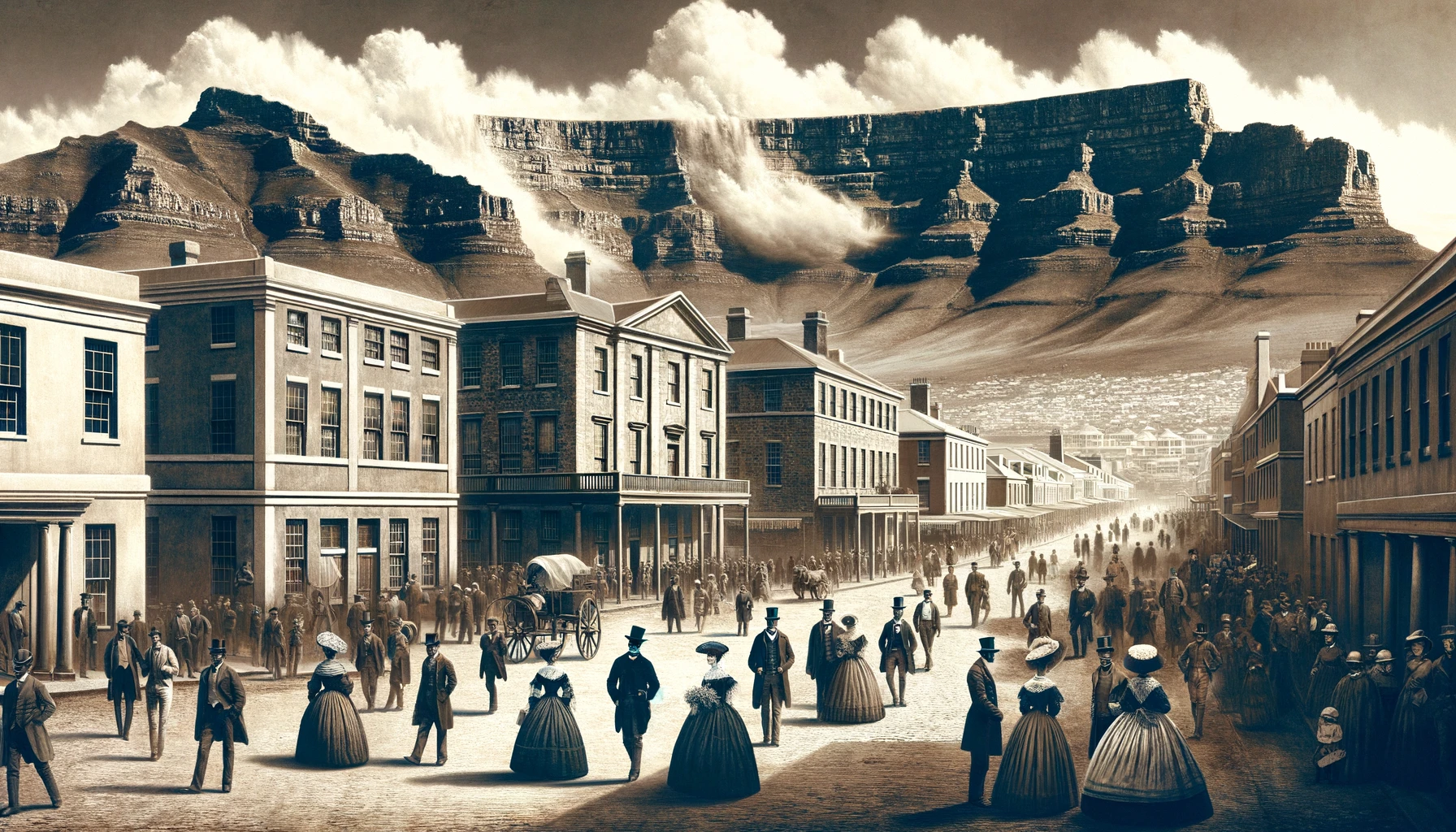
In the ever-shifting tides of the mid-19th century, Southern Africa found itself swept into the currents of global history. Episode 168 of the History of South Africa podcast delves into this pivotal period, exploring the influential figures of Earl Grey and Sir Henry Pottinger, whose actions left indelible marks on the region.

The episode opens against the backdrop of momentous change, with the repeal of the Corn Laws in 1846 signaling a shift towards free trade amid the turmoil of the Irish Famine. As the world grappled with questions of commerce and empire, Southern Africa emerged as a focal point of British political intrigue.
Enter Earl Grey, the third Earl to hold the title, who assumed the role of Secretary of State for War and the Colonies under Lord John Russell’s administration. A staunch advocate of free trade, Grey saw colonies as vital for maintaining commercial monopolies, despite the lessons of America’s independence.

As Grey sought to assert British control over South Africa, he faced the challenge of the Eastern Frontier, where conflict between settlers and the amaXhosa threatened stability. His proposed solutions ranged from military conquest to annexation, reflecting the complexities of colonial governance.
Meanwhile, Sir Henry Pottinger, fresh from his tenure as Governor of Hong Kong, reluctantly assumed the post of Cape Governor. Tasked with quelling frontier unrest, Pottinger confronted a landscape marred by corruption and discord. His efforts to impose order would have far-reaching consequences.
Pottinger’s tenure was marked by a ruthless determination to assert British authority, culminating in the forced conscription of Khoekhoe men from the Kat River Settlement. This act of coercion sparked resentment and resistance, foreshadowing the tumultuous path ahead.
Through the lens of Grey and Pottinger’s actions, Episode 168 illuminates a critical juncture in South African history, characterized by the collision of imperial ambition and indigenous resistance. As the region navigated the currents of change, the echoes of this era continue to reverberate in the present day.
In the midst of these events, South Africa grappled with constitutional changes, mirroring movements in other British colonies. While Canada, Australia, and New Zealand moved towards self-governance, the Eastern Frontier posed unique challenges due to the complexity of relations between settlers and indigenous peoples.
The episode also sheds light on Pottinger’s efforts to establish indirect rule through indigenous chiefs, drawing on his experiences in India and China. However, his confrontational approach and disregard for local customs only fueled resentment, setting the stage for further conflict.
As tensions simmered on the frontier, Pottinger’s confrontational style and disdain for local customs alienated both settlers and indigenous peoples. His tenure, marked by coercion and corruption, laid bare the contradictions of British colonial rule, setting the stage for future struggles.
Through meticulous research and engaging storytelling, Episode 168 offers a nuanced exploration of this transformative period in South African history. By delving into the lives and legacies of Earl Grey and Sir Henry Pottinger, the episode provides valuable insights into the complexities of colonial governance and the enduring impact of imperial ambition.
However, it was how Pottinger was going to treat the Khoekhoe living at the Kat River Settlement that would lead to an uprising. The new governor was rude to the Boers who he accused of insurbordination, as they refused to join his new army raiding the amaXhosa.
He ordered 400 Khoekhoe soldiers to be signed up at the Kat River Settlement, but the officer he sent there returned with about a dozen. This man from Hong Kong was going to destroy the Settlement in a rage, a wrathful excercise, that really has to be heard to be believed.
Already a man of rage, this man of empire, steeped in the rule of the European over everyone else, was going to lead to repercussions that stunned the missionaries. He turned his fullest frustration on the Kat River Settlement, forcibly conscripting virtually every man, leaving the women and children alone. Within a few weeks, all their oxen, cows, sheep and goats were gone.
Every able bodied Khoekhoe male from the age of 16 to 60 had been called up, 90 percent of the males living at the Kat River were forced into Pottingers army, whereas for the other groups providing men, it was more like 3 percent.
Like the Boers, the Khoekhoe from the Kat River served in the British Army without pay. Pottinger had stopped their rations in a kind of spiteful madness. Even Henry Somerset pleaded with Pottinger to hand out rations to the women and children who remained behind at the Settlement but Sir Henry was nothing if not a sociopath. Pottinger wrote to Grey defending his actions, saying the Khoekhoe were idle paupers, a shameful and ignorant comment, provocative and unwise.
A terrible hatred was brewing in the hearts of the Khoekhoe subjected to the British governor’s callousness, as they watched their children begin to starve. The British were going to pay for their disengenuous approach to South African affairs, not for the first time, nor for the last.
The British were now raiding the Kat River Settlement, the home of their allies. Well not for long.

Leave a Reply