

Introduction
In the tapestry of South African history, certain confrontations loom large in the collective memory: the Zulu defeat of the British at Isandlhwana, the Anglo Boer War, the Border Wars, and the struggles against Apartheid. Yet, there exists a pivotal clash that has largely faded from the annals of time—the Battle of GatsLaager. This forgotten battle, which would later be renamed Vegslaaier or fighting laager, holds a unique place in South African history due to its significance and the remarkable tactics employed by both sides.
The Battle Unfolds
At ten o’clock in the morning, under the gaze of the Drakensberg mountains, ten thousand Zulu warriors descended upon GatsLaager. They were led by the skilled commander Ndlela kaSompiti and had been dispatched by Dingana. Inside the laager, Erasmus Smit, the predikant, and the Voortrekkers fell to their knees in prayer, seeking divine intervention for the daunting battle ahead.
Facing insurmountable odds, seventy-five Voortrekker men and a handful of women and boys prepared to defend their laager against the massive Zulu force. Several factors favored the Voortrekkers, including the flooding Bushman’s River on the east side of the laager, strategically designed approaches that left no cover for the Zulu, and the presence of a cannon.
Ndlela’s Brilliant Strategy
Ndlela kaSompiti, a brilliant Zulu commander, was determined to overcome the Voortrekkers’ formidable defenses. He formed his troops into their classic three-tiered formation—the chest and two horns. While the Amabutho waited on open ground to the north and west, Ndlela weighed his options carefully.
He decided to send the left horn of his soldiers down the Bushman’s River, crossing it and attacking simultaneously with the other two sections. This maneuver was intended to stretch the Voortrekkers’ firepower and cut off any potential retreat. The Zulu warriors were highly skilled and well-drilled, making them a formidable force.
The Battle Rages On
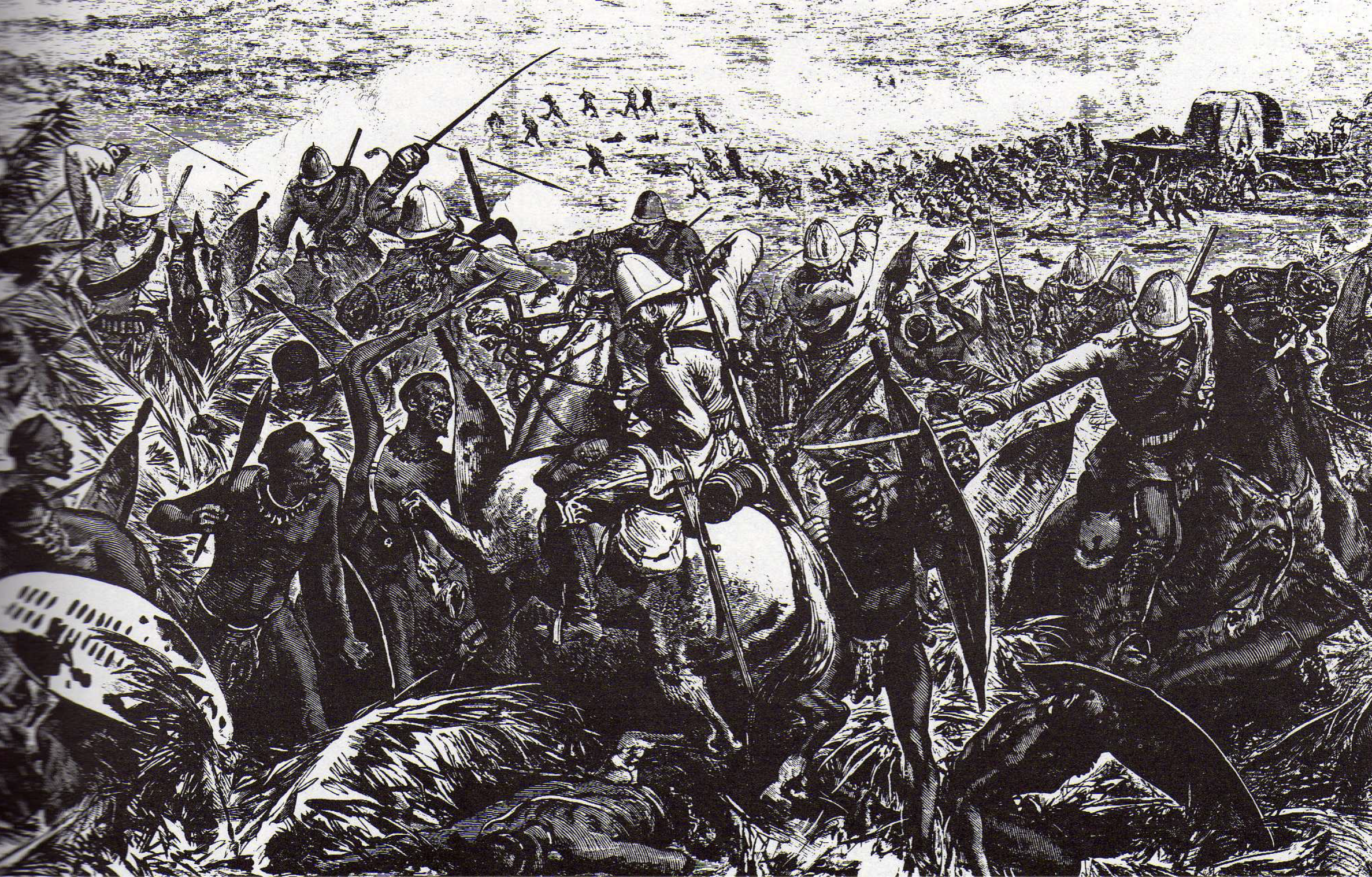
The Zulu assault began at noon, following intricate maneuvers that took two hours to execute. The Amabutho attacked in waves, avoiding clustering together to minimize the Voortrekkers’ accuracy. Inside the wagon laager, chaos reigned as warriors brandishing spears relentlessly pressed their attacks.
The Voortrekkers utilized their most potent weapon, a cannon, to devastating effect. This unfamiliar weapon caused severe casualties among the Zulu ranks. Additionally, over a hundred muskets captured in previous battles were used by selected Zulu warriors, although their fire was largely inaccurate.
As the Zulu drew nearer, the defenders noticed some of the warriors wearing clothing taken from fallen Voortrekkers, serving as a grim warning of the consequences of a weakened defense.
The Turning Point
After an hour of relentless attacks, the Zulu assault began to lose momentum. Hans de Lange, known as Hans Dons, seized the moment and led a small detachment in a sally forth from the laager. While they managed to drive back the closest warriors, they dared not venture too far from the safety of the wagons.
A brief lull in the fighting occurred just after 1 pm when the Zulu withdrew to the open veld on the south side of the wagons. Ndlela needed time to reassess his tactics, and the warriors began slaughtering captured livestock in a gruesome display of violence, further incensing the Voortrekkers.

Continued Conflict and Reinforcements
The battle continued for days with intermittent charges and faints. Ndlela’s attempts to breach the defenses were consistently thwarted, and the Voortrekkers remained resolute. Eventually, the Zulu withdrew, taking the captured cattle with them.
Boer reinforcements arrived from Gert Maritz’s laager at Little Thukela, bolstering the Voortrekkers’ numbers and firepower. Ndlela, aware of the reinforcements, chose not to renew the assault and withdrew his Amabutho.
Conclusion
The Battle of GatsLaager, though largely forgotten, played a crucial role in South African history. The battle showcased the strategic brilliance of Ndlela kaSompiti and the tenacity of the Voortrekkers. Despite overwhelming odds, the Voortrekkers held their ground, ultimately forcing the Zulu to withdraw. This forgotten clash serves as a testament to the complexities of South Africa’s history, where battles, alliances, and shifting dynamics shaped the nation’s destiny.
As we delve further into South African history, we’ll explore the repercussions of this battle and its broader impact on the region. Stay tuned for more stories from the annals of history.

Leave a Reply