
Overview
Across Episodes 236–246 the series moves from the fever of Kimberley’s diamond fields to Natal’s tightening colonial order and, the destruction of the amaHlubi. Commerce, law, and violence braid together: Rhodes’s rise and networks, Natal’s exclusionary politics, the Bushman’s River Pass fiasco, and a show-trial ending in Robben Island exile. Cetshwayo kaMpande returns, and Sir Bartle Frere Confederates.
Episode 236 — The Twelve Apostles, Rhodes & Pass Controls


Kimberley erupts as tent towns mushroom around Colesberg Kopje and the Big Hole deepens—one diamond per dozens of buckets of “blue ground.” Into this world steps the 18-year-old Cecil John Rhodes, who forges the “Twelve Apostles” circle (Merriman, Currey, Rudd, Shippard, Barry) and learns consolidation from Charles Rudd. While black and white diggers labour side by side, a wave of proclamations—licenses, curfews, lashings, pass-like controls—falls hardest on black claimholders. Yet black merchants and miners still prosper, notably around Bultfontein. As the 1873 panic hits, Rhodes embraces the capitalist credo: buy when there’s blood on the streets—foreshadowing the De Beers monopoly.
Rhodes’s ‘Twelve Apostles’: business, politics, and insider intelligence.
Episode 237 — “Going Native,” Indian Indenture & Natal’s Fault Line

Responsible government reshapes the Cape, but Natal ossifies into exclusion: property hurdles and approvals make the black franchise a mirage. The episode dismantles the slur “going native,” reframing John Dunn’s Zulu alliances as shrewd statecraft in a frontier of negotiation. Indentured Indian workers, offered land in lieu of passage, anchor a permanent community that reshapes Natal’s economy and stokes settler resentment. Taxes, sharecropping, and Kimberley’s wage magnet pull labour from farms. Bishop Colenso’s moral critique grinds against Theophilus Shepstone’s paternalist rule—tensions that edge the colony toward rupture.
‘Going native’ was prejudice masquerading as analysis.
Episode 238 — Bushman’s River Pass & Blowing up the Drakensberg
A push to register amaHlubi firearms under Law 5 (1859) collides with pride, poor planning, and mountain weather. Major Durnford’s under-supplied Carbineers reach Bushman’s River Pass to find amaHlubi already entrenched; a tense standoff breaks into a rout, Durnford is wounded, and five in his column are killed. London snarks about “another little war,” but reprisals are sweeping: engineers are sent to blast passes, levies scour caves, and civilians suffer. Humanitarian groups in Britain demand answers, exposing the gap between imperial rhetoric and frontier practice.

Maps, weather, hubris—the Drakensberg took its toll.
Episode 239 — Powder Magazine, Show Trial & Robben Island
Martial law follows. Villages burn; amaHlubi and amaNgwe lands are surveyed for settler farms—officials apply for grants themselves. Law 18 of 1874 turns punishment into coerced “apprenticeship,” delivering cheap labour to colonists. In court, lines blur: Lt-Gov Pine presides as judge; Shepstone prosecutes; defence is constrained; verdict foregone. Langalibalele is banished to Robben Island, while Bishop Colenso and British humanitarians force partial reversals from London. The cost to the amaHlubi is existential—land, cattle, leaders, and cohesion—while Carnarvon spies an opening for a wider imperial federation.

Basotholand: the ‘powder magazine’ in the colonial imagination.
Episodes 243-246: Guns, Mercenaries, and Sir Bartle Frere’s Fatal Overconfidence
Welcome to another epic quartet of South African history where Prussian mercenaries cut throats in the Transvaal, H Rider Haggard raises the Union Jack in Pretoria, Sir Bartle Frere makes every wrong decision possible, and Zulu marriage laws lead to seventy deaths on Christmas Day. These episodes trace the relentless march toward the Anglo-Zulu War—a conflict nobody wanted except the man determined to make it happen.

The Great South African Arms Race
By 1876, the diamond fields had ignited what could only be called a small arms race on the veld. The British arms embargo on Africans was supposedly in place—but was routinely ignored. If black workers at Kimberley wanted to be paid in firearms, they were. Missionaries supplied Tswana chiefs with guns for defence against the Boers. Boer government functionaries traded firearms with Tswana and Ndebele neighbours—while constantly denying this and decrying those who did.
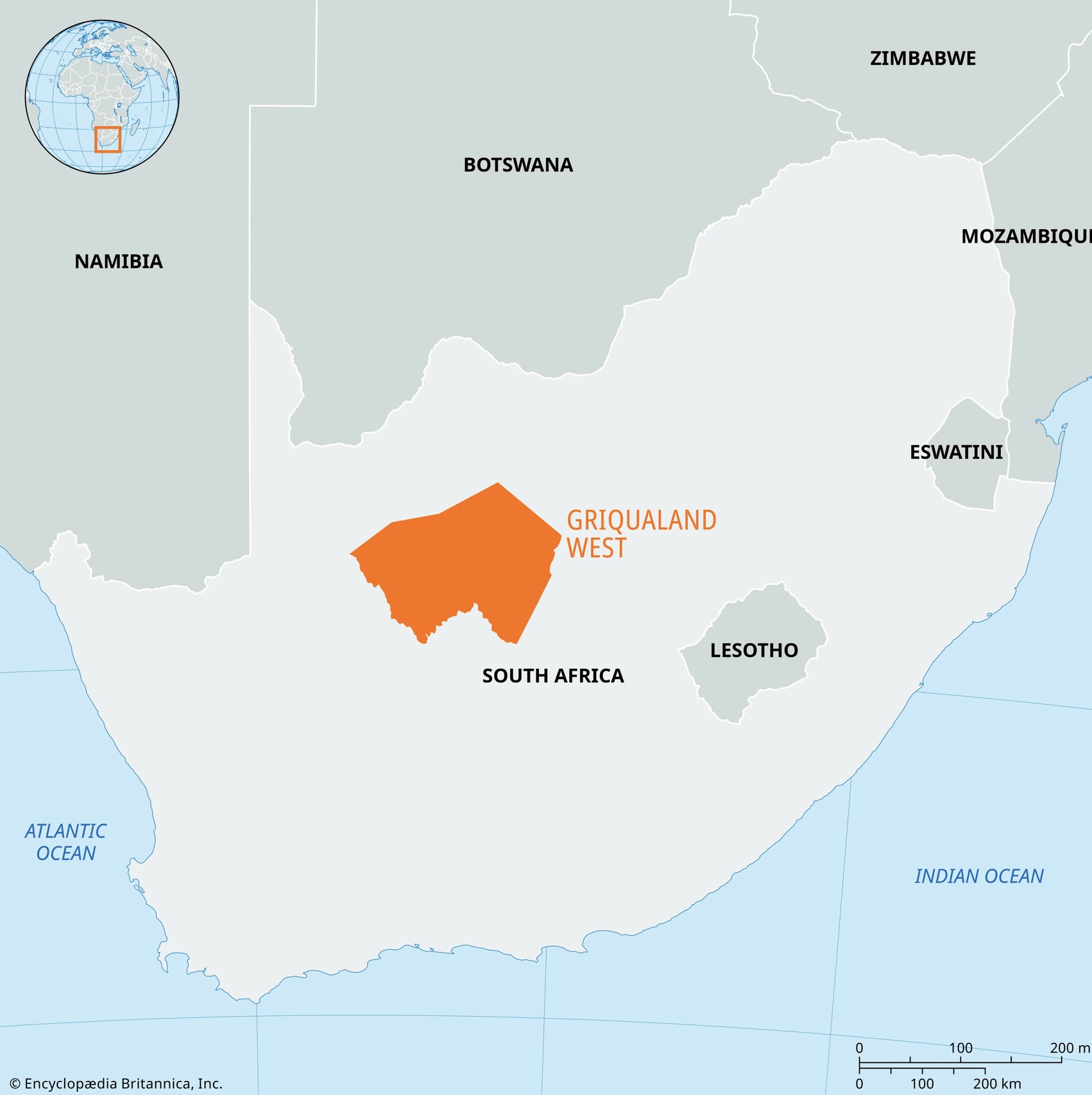
The hypocrisy was stunning. During the last few months of 1873 alone, over 18,000 guns were imported into Griqualand West. By now, African buyers knew an outdated weapon when they saw one, and this meant many of the guns being purchased were the latest models. By the time of the Ninth Frontier War in 1877, the amaXhosa would fire on the British with the same make and model the British were using against them.

The ivory trade fueled this arms race. In 1877, 68,000 kilograms of ivory—the tusks of 12,000 elephants—passed through Shoshong to the south. But they were literally killing the goose that laid the golden ivory. By the early 1900s, the pachyderms would be shot to extinction in most areas.

“When both sides are armed with the same weapon, they can use each other’s ammunition.”
The Pedi War: Enter the Prussian Butchers
The winter of 1876 settled hard across the Transvaal. In the Leolo Mountains, King Sekhukhune’s Pedi kingdom had built stone-walled settlements ringed with thorn stockades and rifle pits dug into hillsides. On May 16, 1876, President Thomas François Burgers declared war—determined to show the Transvaal could still assert itself after years of debt and political squabbling.

Burgers’ decision to take the field personally was unusual. Most Boer presidents preferred to leave command to military leaders. But faced with wavering loyalty, he believed his presence would inspire confidence. So he set out from Pretoria in June—riding in a carriage at the head of a commando. Not exactly a virile commander on his horse.
The first major action came at Mathebe’s Mountain, which Burgers nicknamed “Black Gibraltar.” After two days of fighting on July 4-5, the Boers captured the position. But Mathebe wasn’t the heart of the Pedi kingdom—it was only an outpost.
By August 2, the campaign was over. The Pedi repulsed the Boer assault from hidden rifle pits. Confusion spread, burghers retreated or simply fled. Around campfires that evening came the phrase that would enter the record: “die huis-toe oorlog”—the go-home war.

Into this void arrived Colonel Conrad von Schlickmann.
Mercenaries, Murder, and the Template for Genocide
On September 4, 1876, the Volksraad contracted von Schlickmann and his Lydenburg Volunteer Corps. They were promised 2,000-acre farms in Pedi territory if the war succeeded. Pay came in IOUs—everyone knew they’d make good their wages by plundering Pedi settlements.
The corps fought differently from commandos. They believed in scorched earth—burning huts, seizing livestock, cultivating fear deliberately. They targeted non-combatants. Women and children were not spared.
Cape Governor Sir Henry Barkly’s December 1876 dispatch was chillingly precise: “There is no longer the slightest doubt as to the murder of the two women and the child at Steelport by the direct order of Schlickmann… he ordered his men to cut the throats of all the wounded.”
What von Schlickmann’s corps practiced in 1876 looks like a template. Two decades later, German Schutztruppe in Namibia would use the same methods, culminating in genocidal campaigns against the Herero and Nama from 1904. In the Transvaal it was still improvised—a desperate republic outsourcing its war to a hired band. But the echoes are unmistakable.
In November 1876, Schlickmann was ambushed by the Pedi and killed. Command fell to Alfred Aylward, an Irish Fenian exile who later published The Transvaal of To-Day (1878), excoriating Boer leadership while painting himself as a truth-teller.
By December, the Volunteer Corps was disintegrating. The mercenary experiment had lasted barely three months. But its shadow stretched forward—into British annexation, into colonial warfare’s future, and into Pedi memory of outsiders who arrived with strange accents and merciless methods.
“They ordered their men to cut the throats of all the wounded.”
Sir Bartle Frere
Twitters and the Annexation of the Transvaal
British Prime Minister Disraeli had a nickname for Colonial Secretary Lord Carnarvon: “Twitters.”
Twitters explained his reasoning: “matters…are extremely critical,…I have received information that a meeting has already been called by a certain part of the people to ask for our intervention and to take over the Government of the country.”

Historians have hunted high and low for these Dutch authorities as consenting parties—they do not exist. The British tried to perpetuate the Transvaal’s weakness until Boer conditions improved between October 1876 and April 1877. By February 1877, Sekhukhune came to terms with the Boers—the war ended.
Clearly the weakness Carnarvon hoped would compel voluntary cession to Britain did not exist. Yet Garnet Wolseley and Carnarvon decided on forcible annexation in April 1877 based on the fact that the Boers were growing stronger, not weaker.

In late December 1876, Sir Theophilus Shepstone departed Pietermaritzburg with just 25 Natal Mounted Police and a handful of officials including young H Rider Haggard—who wasn’t even being paid. Work experience, apparently.
On April 12, 1877, Shepstone formally proclaimed annexation in Pretoria’s Church Square. President Burgers resigned the same day, replaced by Paul Kruger. The ceremonial hoisting of the Union Jack took place on May 24—Queen Victoria’s birthday. Haggard raised the flag because the official tasked with it lost his voice.

Haggard later described it as “one of the proudest moments” of his life. This experience fed directly into his first book, Cetywayo and His White Neighbours (1882), and eventually into King Solomon’s Mines (1885). The template for Indiana Jones was born in Pretoria.
The go-home war—the humiliation was profound.


Railways, Fire, and Historical Irony
Between 1875 and 1877, the country was developing. Prime Minister John Molteno’s Cape government constructed railway lines from Port Elizabeth and Uitenhague. By 1877, lines included the Western Line from Cape Town to Worcester, the Midland Line, and the Eastern Line expanding from East London to King William’s Town.
The Cape Western Line was charted by Molteno himself, armed with only a map, pen, and ruler. Once the Hex River Mountains were overcome in 1876 with bridges and tunnels, the line rapidly extended through the Karoo to Beaufort West, De Aar, and Kimberley.
The South African International Exhibition of 1877 was Cape Town’s own world’s fair—a grand display of empire and invention staged beneath a glass-and-iron pavilion nodding to London’s Crystal Palace.
Fifteen years later, that optimism went up in smoke. The exhibition hall, the Masonic Lodge, and the Native Affairs office burned to the ground in 1892.
A century passed. Then in 2022, another fire consumed South Africa’s Parliament—allegedly lit by a lone, troubled man. History, it seems, likes to warm its hands over familiar flames.

A new Parliament will rise by April 2026 at a cost of two billion rand. For that, you could have built South Africa’s entire railway network in 1877.
Sir Bartle Frere’s Excellent Blunders
Sir Bartle Frere sailed into South Africa in March 1877, lauded as a great British administrator in India. He arrived just in time to witness Shepstone annex the Transvaal under the noses of incredulous and contemptuous Boers.
Frere was determined to enforce confederation. He’d kept the vital Indian province of Sind quiet during the Mutiny and upgraded Bombay’s infrastructure. The Royal Family were friends, he was a member of the Privy Council, showered with honours.
But he was Indian in experience, not African. By contrast to sophisticated Indian rulers, South Africans were uncomplicated and pugnacious—then as now. It would take only a few years trying to govern the ungovernable before he disintegrated in delusion, self-deception, irrationality, and apparent senility.
Frere had barely settled in when the Ninth Frontier War burst into flame in September 1877. Tensions between amaMfengu resettled on Gcaleka land boiled over when a fight broke out at a wedding party.

Frere sensed his moment. He believed Great Britain was spreading civilization, eradicating barbarians, extending black rule over blacks—guiding them up the evolutionary ladder through good administration and economic prosperity.
Chief Sarhili of the amaGcaleka was summoned but ignored it—he’d seen ancestors summoned only to be thrown onto Robben Island. Frere promptly declared war, totally against local advice.
Cape Prime Minister John Molteno refused to sanction any invasion. At a meeting, Frere promised imperial troops would stay put. This promise was documented—because promises are easily broken.
The War Council from Hell
Frere rushed to King William’s Town to set up a War Council: himself and Lieutenant Governor Sir Arthur Cunynghame on one side, Molteno’s ministers John X Merriman and Charles Brownlee on the other.
From the moment these four sat down, it was fireworks. Their disputes would set the tone for all South Africa’s political future.

The Cape Colony didn’t want Gcaleka land—they were already hard-pressed servicing existing territory. Brownlee and Merriman were receptive to Gcaleka requests for negotiations. Frere refused, wanting full opening of Gcalekaland to white settlers.
Then a bombshell: Frere ordered disarmament of all black people inside the Cape Colony. Molteno protested furiously—many of the Colony’s soldiers were black, including the highly effective amaMfengu.
Cunynghame panicked and unilaterally ordered imperial troops to encircle British Kaffraria. Molteno’s metaphorical foofi valve burst. The Cape government demanded Frere fire Cunynghame, abandon racial disarmament, and allow black paramilitaries to restore order.
Frere refused. Instead he imported more British troops at great cost—to disarm the Cape’s former allies.
Once disarming was completed, troops invaded Gcalekaland. Just like the Eighth Frontier War, the British repeated all their old mistakes—like a lunatic drunkard staggering from one hit-and-run to another.
The amaXhosa led imperial soldiers on a wild goose chase. The British were unable to engage or even find their enemy. The Gcaleka slipped past, sometimes only metres away.
Sandile re-entered the Cape Colony with his amaNgqika warriors—the settlers’ biggest fear realized. The two arms of the amaXhosa nation reunited. AmaMfengu towns were ransacked, supply lines cut, police outposts evacuated. The British retreated.
Molteno sailed to East London and rushed to King William’s Town, personally confronting the ashen-faced Frere. He condemned Frere to his face for incompetence and demanded control of the Cape’s Commandos.
Frere did what all uselessnesses do—he telegraphed London asking to dissolve the elected Cape Government. He was granted permission. Molteno and his cabinet were sidelined.
What a mess outsiders have made of our history, folks.
AmaMfengu Save the Empire (Again)
Frere eventually realized his folly and reconstituted the amaMfengu battalions, giving back their firearms. The most skilled bush fighters in the region, led by Veldman Bikitsha, cornered Gcaleka forces in January 1878 near Nyumaxa and defeated them.
What the British couldn’t do in three months, he did in three days.
On February 7, exhausted imperials short of rations came under attack at Centane. About 1,500 Gcaleka and Rharhabe warriors attacked the British camp. Imperial forces—400 British soldiers of the 67th Durham Light Infantry commanded by Captain Russell Upcher, supported by 560 Fengu warriors and Frontier Light Horse militia—defended their posts.
About 300 Gcaleka and Rharhabe warriors were killed for the loss of only two British soldiers and eight Mfengu warriors. The Battle of Centani was the last straw—the exhausted amaGcaleka informed Sandile they would no longer fight.

Sandile’s amaNgqika fought on in guerrilla warfare inside the Amatola Mountains. The British appeared to have forgotten all lessons from the last war—how to fight in jungle-entwined mountain ravines.
After weeks of madness repeating failed tactics, someone switched on new commander Lieutenant General Frederic Thesiger’s brain. The Cape Commandos told the British the only way was to break the territory into military provinces with mounted garrisons in each.
Thesiger duly broke British Kaffraria into eleven military districts with mounted garrisons. The amaMfengu pursued Sandile down the Fish River Valley. During a firefight, he was shot and killed. Ironically, his body was buried at Izidenge between two British soldiers’ graves. The British fired a volley over his grave as a sign of respect.

The war was over. A hundred years of wars had ended in the Eastern Cape. Casualty figures: British, colonial and Mfengu totaled 300; amaXhosa, 1,500.
Had Frere not moved troops to the frontier and taken Molteno’s advice, this would have been localized strife. But Frere was a confederationist in a rush. His Big Picture obscured the Real Picture.
This was the moment the amaXhosa lost Gcalekaland—the final blow to their ancestral heartland.
Black Bricks, Armed Maids, and Christmas Day Carnage
Meanwhile in Zululand, King Cetshwayo kaMpande presided over a squabbling nation from his great place, Ondini. His special residence was built of sun-dried bricks burned black, given by Norwegian missionary Reverend Ommund Oftebro.
The black-bricked building had four wallpapered rooms, glazed windows, verandahs, two locked doors. It contained European furniture, a washstand, and a large mirror. At night, the doors were locked and guarded by two women—armed with guns.
Yes, women with guns. English trader John Dunn personally trained these VIP bodyguards in musketry. They carried short carbines ideal for close-quarter protection and accompanied Cetshwayo everywhere.

One maid, Nomguqo Dlamini, later described daily life in her book Servant of Two Kings. She and other maids-of-honour would sometimes peep through lattice-work walls to admire their naked king after his morning wash.
No sound was allowed while the king ate—anyone breaking the rule would be killed. When he wanted to urinate, he’d wander behind his hut so no one could use any part of his body for muti. For a number two, he’d don a large black overcoat with red trimmings, a black hat and shoes, and head to a small nearby hill.
The Bloody Marriage of the Ngcugce
In 1875, Cetshwayo granted the iNdlondlo regiment—men in their 40s formed way back in 1857—permission to marry. The problem: he directed them to seek brides from the iNgcugce regiment, women born between 1850 and 1853, far younger.
These women had already formed relationships with much younger men from the uMbonambi, uMxhapho, and uDududu regiments. They scorned the middle-aged warriors’ advances.
One girl said: “the necklace is not long enough to fit around the neck…”
Sensing danger, Cetshwayo hastily announced the younger uDloko regiment would gain headrings. The women were even angrier—why did this regiment get headrings when their lovers didn’t?
Furious at this breakdown of royal control, Cetshwayo dispatched warriors to scour the land and kill any iNgcugce woman who hadn’t married as ordered, seizing their fathers’ property. He ordered any young couples found traveling alone to be killed, their bodies placed across their path facing each other—a chilling warning.
It’s hard to say how many died, but chiefs later admitted killing dozens. One induna said he’d had 31 killed and laid 3 couples face-to-face on their final journey.
At the umKhosi ceremonies in December 1877, Cetshwayo’s counselors made a fatal error. They crammed the boastful young iNgobamakhosi alongside older warriors in cramped quarters. The married men were visited by their wives—forcing the young warriors to wait outside while they made merry. Some women had been these young men’s lovers before marriage.
On Christmas Day, December 25, 1877, a stick fight broke out. The iNdluyengwe youngsters drove their elders back into their huts—the ultimate humiliation. The elders grabbed spears and counterattacked.
The fighting went on all day. Seventy men were dead by evening.
AmaZulu public opinion swung against Cetshwayo. He’d bungled by breaking rules, showing favoritism to the iNgobamakhosi. Induna Hamu demanded the death of iNgobamakhosi leader Sigcwelegcwele. The king refused—he would only pay a fine.
Hamu stomped off to his northern home. He would only return on the eve of the British invasion in November 1879.
Seventy men dead on Christmas Day—the king had bungled by breaking the rules.”
The Blueprint for Invasion
Back in Cape Town, the sixty-two-year-old Frere must have been feeling his age. The average life expectancy for men was 44; those who survived often lived only to 70.
Frere’s daughter Mary sounded alarms about her father’s inability to cope. In 1877: “the whole country is disorganised.” A year later: “He is very worn with the last 18 months work, and as bent as ever on knocking nails into his coffin…”
Incredibly, events in Afghanistan contributed to the Anglo-Zulu War’s cause. Frere’s views on Britain’s Afghan relations commanded respect. “Masterly inactivity” was to be avoided—it was all action, firm action, to stop Russian advances.

In his 1874 letter to Sir John Kaye, published by The Times in 1878, Frere wrote: “If the Frontier Commander is ambitious, his uncivilised neighbours give him constant and apparently justifiable cause for hostilities… which in the end must always lead to the victorious advance of the stronger and more civilised power.”
When the British sent a mission to Afghanistan and the Emir refused entry, London sent an ultimatum. When the Emir didn’t answer, three columns invaded Afghanistan in November 1878.
This sequence—which Frere influenced—convinced him it was an ideal blueprint for handling the Zulu situation. England would invade Zululand almost exactly a year after invading Afghanistan.
Between 1815 and 1914, the British waged more colonial wars than any European power except France.
There was one thorn: boundary commissioners who sat on the Transvaal-Zulu territorial dispute had settled mainly in favor of Zulu claims.
But Britain had annexed the Transvaal. Now there was drama on the Zululand border—at least in the minds of Natal residents and expansionists in Frere’s administration.
Bishop Colenso and his daughter Frances watched with growing alarm as distortions about Cetshwayo metastasized. The Zulus and colonists had lived in peace for twenty years—why stoke the fires now?
The ides were not idling.
Next episodes: The ultimatum, Isandlwana, and the greatest military disaster in British colonial history. Gird those loins.
Leave a Reply